Washington DC African American History Tours: Discover the City’s Historic Landmarks
Private guiding • Historic landmarks • Meaningful local stories
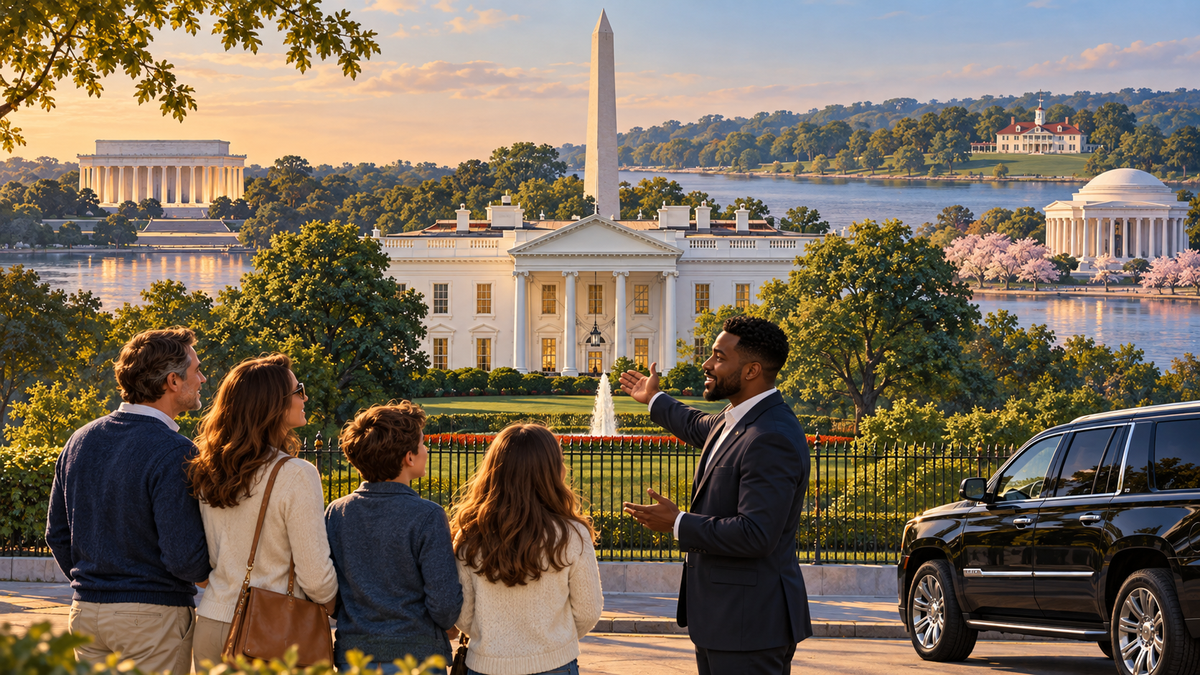
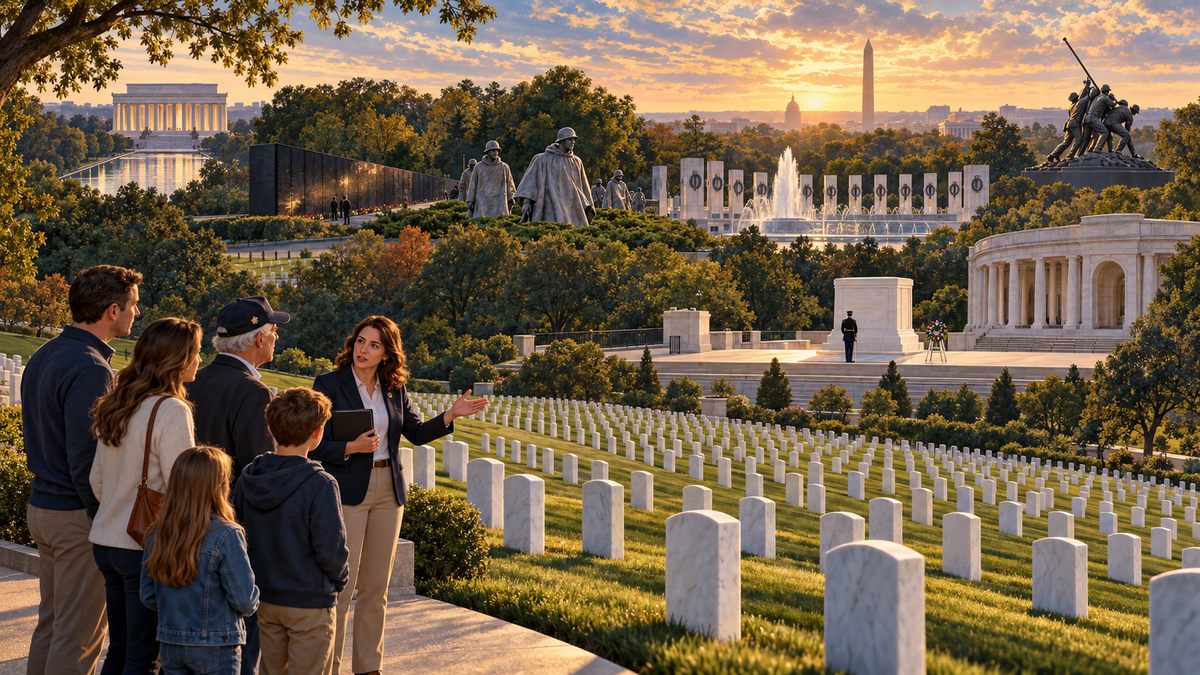
Washington, D.C. is filled with stories of courage, achievement, resistance, and progress. A private African American history tour connects the memorials, universities, neighborhoods, theaters, and cultural institutions that helped shape both the capital and the country.
Black history in Washington is not limited to one monument or museum. It lives throughout the city—in its neighborhoods, universities, theaters, restaurants, institutions, and public spaces.
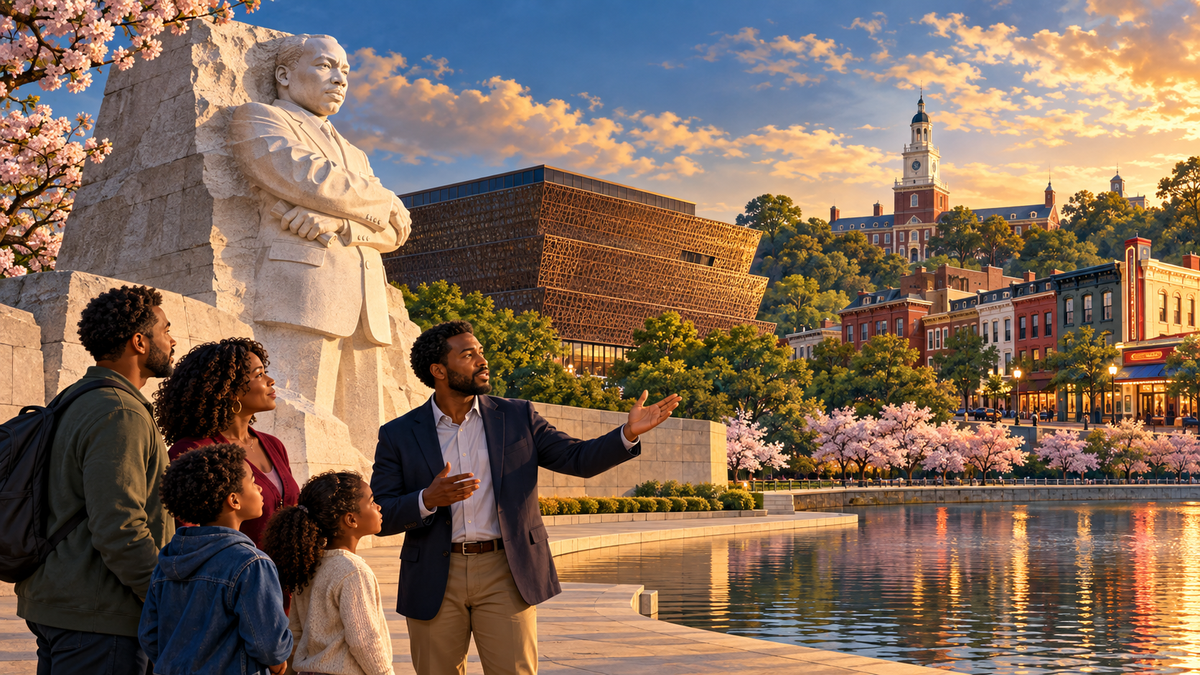
Many visitors recognize the Martin Luther King Jr. Memorial and the National Museum of African American History and Culture. However, the complete story extends far beyond the National Mall.
It includes Howard University, the historic U Street corridor, Lincoln Park, the Howard Theatre, Ben’s Chili Bowl, the African American Civil War Memorial, and the people who transformed Washington into an influential center of Black education, culture, business, politics, music, and civil rights.
The best Washington DC African American history tours do more than identify buildings. They connect the people, places, and movements behind them—helping visitors understand why each landmark matters and how its story fits into the larger American experience.
Why Explore Washington’s African American History With a Guide?
You can visit many Black history landmarks independently, but seeing a statue or standing outside a building does not always reveal its full significance. Some of the city’s most important stories are found in the connections between locations.
A knowledgeable guide can explain how Washington’s Black communities built schools, churches, businesses, newspapers, entertainment districts, and political organizations—often while facing segregation and discrimination.
01
Understand the Context
Learn what happened at each location and how local events connected to larger national movements.
02
Discover Hidden Stories
Hear about influential educators, soldiers, musicians, leaders, and entrepreneurs who are often overlooked.
03
Explore More of DC
Travel beyond the National Mall into neighborhoods and cultural districts many visitors never experience.
04
Ask Questions
A private format creates room for conversation, questions, and subjects that matter most to your group.
Historic Black Landmarks You May Visit
A guided route can combine nationally recognized memorials with universities, cultural institutions, neighborhoods, and gathering places. Exact stops may vary according to traffic, closures, public events, timing, and your group’s interests.
Martin Luther King Jr. Memorial
Located along the Tidal Basin, the Martin Luther King Jr. Memorial honors one of the most influential leaders of the American civil rights movement. The memorial’s location creates a symbolic line between the Lincoln and Jefferson memorials, connecting Dr. King’s work to the nation’s founding ideals and the continuing struggle to fulfill them.
A guided stop can provide context for the Stone of Hope, Mountain of Despair, surrounding inscriptions, and major moments in Dr. King’s life—including his leadership during the Montgomery Bus Boycott, Birmingham Campaign, March on Washington, and Poor People’s Campaign.
Lincoln Memorial
The Lincoln Memorial has become one of America’s most important locations for civil rights demonstrations. In 1939, acclaimed contralto Marian Anderson performed on its steps after the Daughters of the American Revolution refused to allow her to sing at Constitution Hall.
On August 28, 1963, Dr. King delivered his “I Have a Dream” speech from the same steps during the March on Washington for Jobs and Freedom. A private guide can connect these events to the memorial’s broader history and symbolism.
Howard University
Founded in 1867, Howard University became one of the country’s most influential historically Black universities. Its graduates and faculty have made major contributions to law, medicine, education, literature, science, politics, entertainment, and civil rights.
Howard’s story is connected to figures including Thurgood Marshall, Charles Hamilton Houston, Alain Locke, Toni Morrison, Zora Neale Hurston, and Vice President Kamala Harris. The university also played an important role in developing legal strategies used to challenge segregation.
U Street and Black Broadway
Washington’s U Street corridor became one of the country’s most important centers of Black culture, business, entertainment, and community life. The neighborhood was widely known as “Black Broadway” during the era of racial segregation.
Its clubs, theaters, restaurants, and music venues welcomed some of America’s greatest Black performers. The neighborhood was also home to successful Black-owned businesses, newspapers, professional organizations, churches, and social institutions.
Howard Theatre
Opened in 1910, the Howard Theatre became one of the most celebrated entertainment venues serving Black audiences and performers. Duke Ellington, Ella Fitzgerald, Billie Holiday, Cab Calloway, Marvin Gaye, and many other legendary entertainers are connected to its history.
The building represents more than entertainment. It reflects the energy, sophistication, and cultural influence of Washington’s historic Black community.
Ben’s Chili Bowl
Ben’s Chili Bowl opened on U Street in 1958 and became a beloved Washington institution. It remained open during the unrest that followed Dr. King’s assassination in 1968 and later survived neighborhood decline and disruptive Metro construction.
Today, it represents continuity, family ownership, community resilience, and the enduring cultural importance of the U Street corridor.
Mary McLeod Bethune Memorial
Located in Lincoln Park, this memorial honors educator, organizer, presidential adviser, and civil rights leader Mary McLeod Bethune. She founded a school that eventually became Bethune-Cookman University and established the National Council of Negro Women.
Bethune also advised President Franklin D. Roosevelt and worked to expand opportunities for African Americans and women. Her memorial was the first monument on public land in Washington dedicated to an African American and a woman.
Lincoln Park and the Emancipation Memorial
Lincoln Park provides an opportunity for a thoughtful discussion about emancipation, memory, representation, and how the country chooses to portray its history. The Emancipation Memorial was funded primarily through contributions from formerly enslaved African Americans and dedicated in 1876.
Its imagery has also generated important modern conversations about who creates public monuments, whose perspective they represent, and how historical artwork should be interpreted today.
African American Civil War Memorial
The African American Civil War Memorial honors the more than 200,000 Black soldiers and sailors who served the Union during the Civil War. Its surrounding Wall of Honor records the names of members of the United States Colored Troops.
The site helps visitors understand how military service became connected to emancipation, citizenship, family reunification, voting rights, and the continuing struggle for equality.
National Museum of African American History and Culture
The Smithsonian National Museum of African American History and Culture explores centuries of history, achievement, creativity, struggle, and resilience. Its exhibitions cover slavery and freedom, segregation, military service, civil rights, music, sports, religion, community life, and popular culture.
The museum is extensive, so visitors should not expect to see everything quickly. Perfect Private Tours’ current Black History Tour concludes at the museum, where guests can continue exploring independently after the guided portion of the experience.
What Connects These Washington Landmarks?
Each location represents a different part of the African American experience, but the sites become more powerful when their stories are connected.
| Historical theme | Related locations | What visitors discover |
|---|---|---|
| Civil rights | MLK Memorial and Lincoln Memorial | How protests, speeches, and organized movements challenged discrimination. |
| Education | Howard University and Mary McLeod Bethune Memorial | How education became a powerful tool for advancement, leadership, and legal change. |
| Culture and music | U Street and Howard Theatre | How Washington became an important center of Black music, performance, and cultural influence. |
| Military service | African American Civil War Memorial | How Black military service influenced emancipation, citizenship, and civil rights. |
| Community resilience | Ben’s Chili Bowl and the U Street corridor | How Black-owned institutions survived segregation, unrest, disinvestment, and neighborhood change. |
Why Choose a Private Black History Tour?
Large group tours often follow a fixed route and leave limited time for questions. A private experience provides greater flexibility and allows the conversation to reflect your group’s age, interests, and existing knowledge.
The private-tour advantage: Your group receives its own guide, private vehicle, direct conversation, hotel pickup, and a route focused on meaningful Black history landmarks.
Private transportation is particularly valuable because the landmarks are spread across several parts of Washington. Your group can travel between the National Mall, Howard University, U Street, and Capitol Hill without arranging multiple rides, studying public transportation routes, or searching for parking.
A private vehicle also allows guests to rest between stops, leave unnecessary belongings inside, and reduce the amount of walking compared with attempting to reach every landmark independently.
Who Is This Experience Best For?
- Families and multigenerational groups
- Cultural and heritage travelers
- School and educational groups
- Churches and community organizations
- Family reunions
- Civil rights history enthusiasts
- Music and cultural history enthusiasts
- Visitors returning to Washington
The tour is valuable for visitors from every background. African American history is not a separate side story—it is an essential part of understanding Washington and the United States.
What to Expect From the Private Tour
- Convenient pickup. Your guide meets you at your Washington hotel or another approved central pickup location.
- A private vehicle. Your transportation is reserved exclusively for your party rather than shared with unfamiliar guests.
- Stories throughout the journey. The guiding continues between landmarks, connecting the neighborhoods and historical themes.
- Selected guided stops. Your group can exit at important locations for closer views, photographs, and discussion.
- Museum continuation. The current experience concludes at the National Museum of African American History and Culture for independent exploration.
The itinerary may change because of traffic, weather, road closures, security activity, demonstrations, construction, or public events. A professional local guide can adjust the order of stops while preserving the historical focus of the experience.
How to Prepare for Your Tour
Wear Comfortable Shoes
Private transportation reduces the amount of walking, but guests should still expect some walking at memorials and historical sites.
Check the Weather
Many important stops are outdoors. Dress for the season and bring appropriate layers, rain protection, sunscreen, or cold-weather accessories.
Share Your Interests in Advance
Tell the company if your group is particularly interested in civil rights, education, military service, music, local neighborhoods, politics, or another subject.
Reserve Early
Private guides, vehicles, and museum entry times can be limited—especially during spring, summer, holidays, school travel periods, and major Washington events.
Frequently Asked Questions
Is the Washington DC Black History Tour private?
Yes. The guide, vehicle, and tour experience are reserved for your party. You will not be combined with an unrelated sightseeing group.
Does the tour include transportation?
Yes. Private transportation is included during the experience. The appropriate vehicle depends on the number of guests in your party.
Is hotel pickup included?
Pickup is available from Washington, D.C. hotels and approved central locations. Enter your pickup details when making the reservation.
Does the tour visit the African American history museum?
The current Black History Tour concludes at the National Museum of African American History and Culture and includes timed-entry admission. Guests explore the museum independently after the guided tour ends.
Is this tour appropriate for children and students?
Yes. The private format allows the guide to adjust the presentation and level of detail for families, students, and multigenerational groups.
Will we get out at every landmark?
The experience generally combines guided walking stops with landmarks viewed from the vehicle. The exact route depends on available time, traffic, accessibility, closures, and your group’s priorities.
Can the itinerary be customized?
Private tours offer more flexibility than shared tours. Requests should be submitted before the tour so the company can determine what is realistic within the reserved time.
What happens after the museum visit?
The guided experience ends at the museum. Guests are responsible for arranging transportation after completing their independent museum visit.
Discover a Deeper Side of Washington, D.C.
Washington’s most famous buildings tell only part of the city’s story. Its African American history lives in the places where people learned, organized, performed, served, worshiped, protested, created businesses, raised families, and changed the country.
A thoughtfully guided tour connects those places to the people and movements behind them. Instead of simply passing historic landmarks, your group gains a deeper understanding of what happened there and why those stories still matter.
For cultural travelers, families, and educational groups, a private Black history experience can become one of the most meaningful parts of a visit to the nation’s capital.
Private • Personal • Meaningful
Experience Washington’s African American History
Explore historic landmarks with a private guide, comfortable transportation, hotel pickup, and powerful stories that connect Washington’s past to the American experience.
Routes, stops, timing, museum entry, and accessibility may change because of traffic, weather, road closures, security restrictions, public events, or site availability. The guided portion of the current Black History Tour concludes at the National Museum of African American History and Culture. Guests are responsible for arranging transportation after their independent museum visit.